About
About Us
We are the Service Employees International Union (SEIU), an organization of 2 million members united by the belief in the dignity and worth of workers and the services they provide — and dedicated to improving the lives of workers and their families and creating a more just and humane society.
History
Explore key moments in the history of SEIU.
1921: Workers Form the Building Service Employees Union
When the Building Service Employees Union (BSEIU) first formed in Chicago in 1921, it was far ahead of its time. Unlike most unions of its day, BSEIU was integrated. In fact, Black, immigrant and women members already held leadership roles. As William Quesse, the union’s first president and son of German immigrants said, “we are composed of all creeds, colors and nationalities, and do not allow anyone to use prejudice in the organization against each other.”
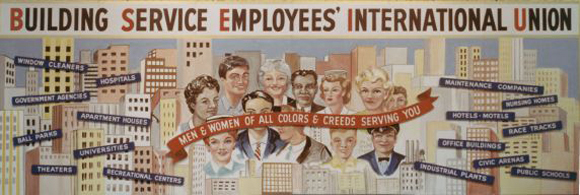
1934: New York Building Workers Strike & Win Their Union
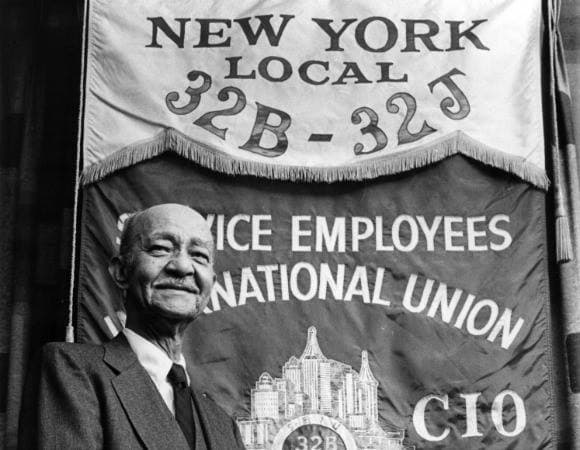
Building service workers formed 32-B in April of 1934 and went on strike in November. Manhattan’s skyscrapers were largely inaccessible without elevator operators, but even by the standards of the Great Depression, building service workers’ wages were low and they were treated poorly. Building workers in around 400 buildings in midtown Manhattan’s garment district went on strike and won union rights.
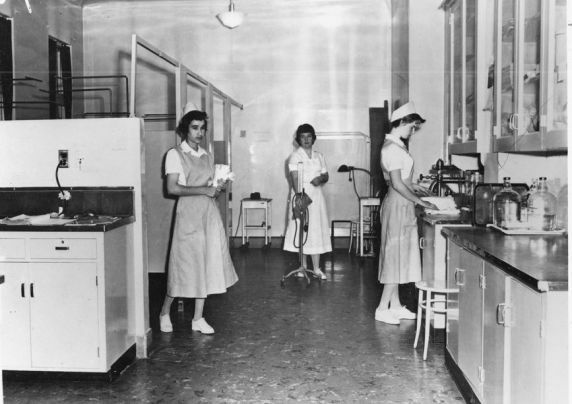
1941: Healthcare Workers Join BSEIU and Win Ground-Breaking Contract
Inspired by the 1934 general strike in San Francisco, healthcare workers organized their hospital. They then joined BSEIU and won a groundbreaking first contract with the San Francisco Hospital Conference, covering 11 hospitals. This laid the groundwork for present-day SEIU to eventually become the country’s largest healthcare union.
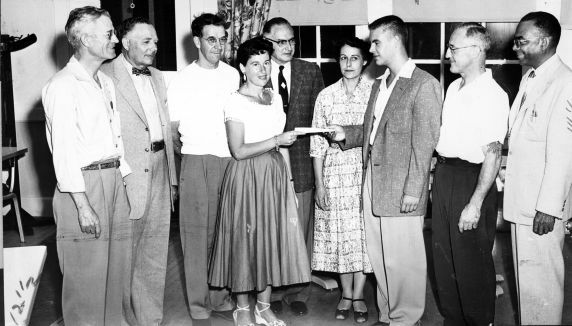
1953: Public Workers Join BSEIU
Elinor Marshall Glenn, the first woman to become General Manager at SEIU Local 434, helped organize thousands of public hospital workers in LA County.
1961: BSEIU Fights for Civil Rights
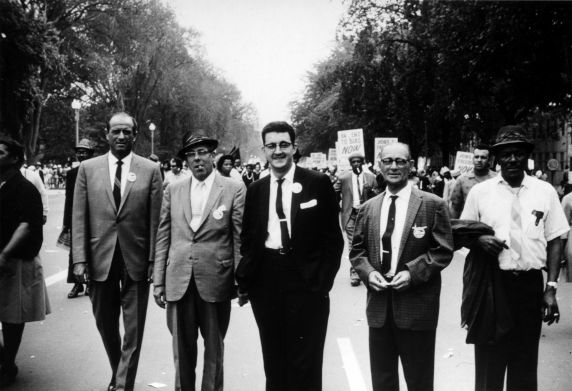
BSEIU President David Sullivan established a Civil Rights Committee and created an action plan to support the fight against segregation and racism. In 1963 President Sullivan, and many other BSEIU members, attended the March on Washington.
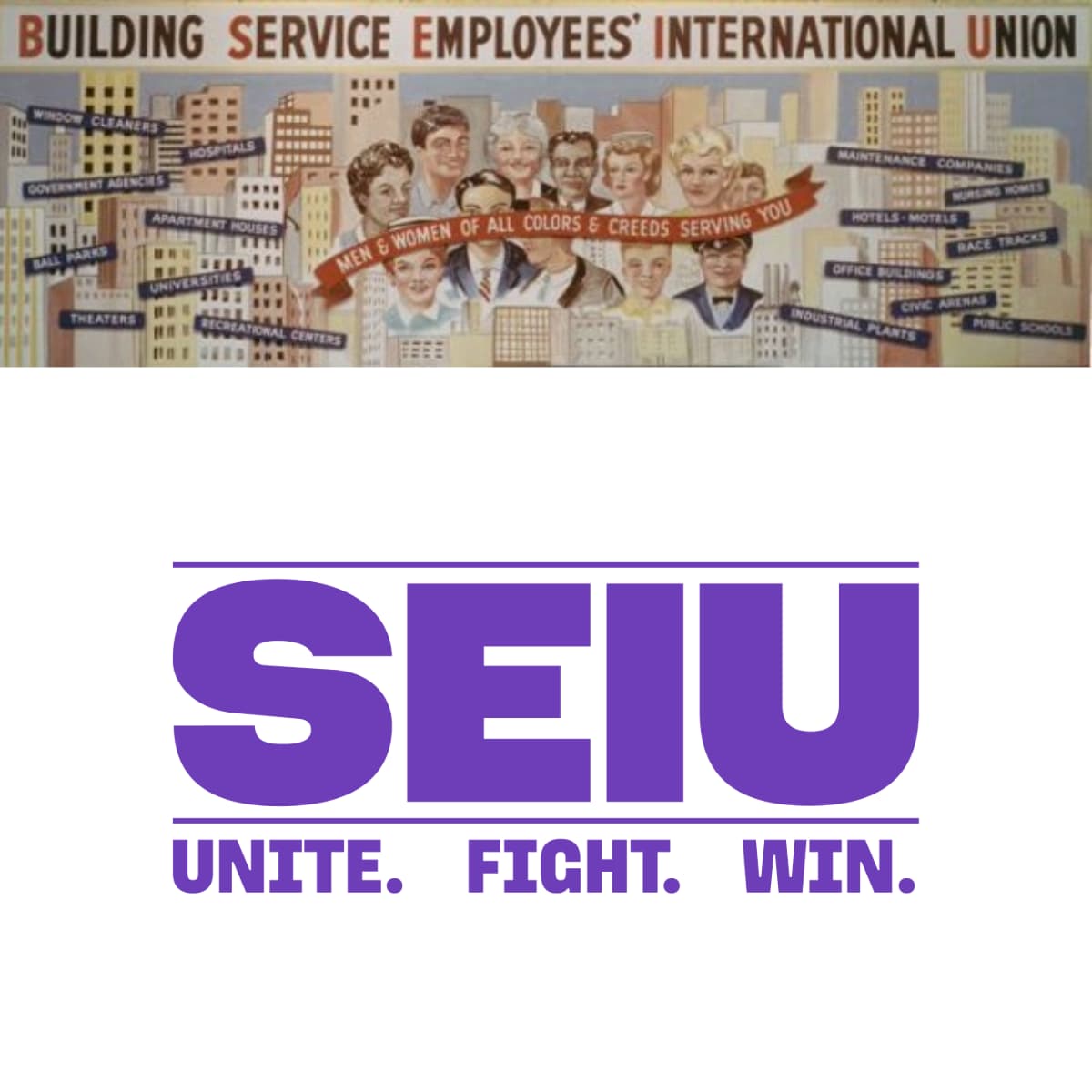
1968: BSEIU Officially Becomes SEIU
1975: Working Women’s Movement 9 to 5 Joins with SEIU
In 1972, women office workers banded together to form 9to5, National Association of Working Women. After three years, their founders realized they needed a way to hold their bosses accountable. They joined SEIU and formed Local 925 in Boston. The movement inspired the box office success comedy, 9 to 5, starring Dolly Parton, Lily Tomlin and Jane Fonda.
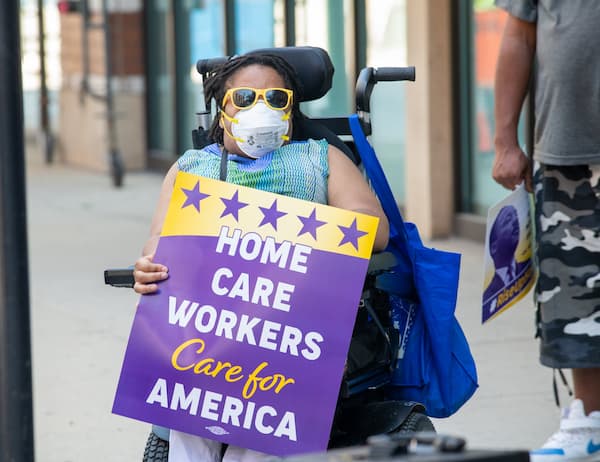
1980’s: Home Care Workers Win Their Union
SEIU began organizing home care workers in the early 1980s. SEIU currently represents over 740,000 home care workers across the country, including over 100,000 in CA alone.
1984: As Healthcare Members Fight HIV/AIDS Crisis, Union Advocates for LGBT Members
Considered radical at the time, as SEIU healthcare members cared for HIV/AIDS patients, the union worked to raise awareness and spread information about the need for compassionate care. SEIU also advocated for its LGBT members, adopting a resolution supporting benefits for LGBT members and their families. The documentary, 5B features SEIU member Mary Magee.
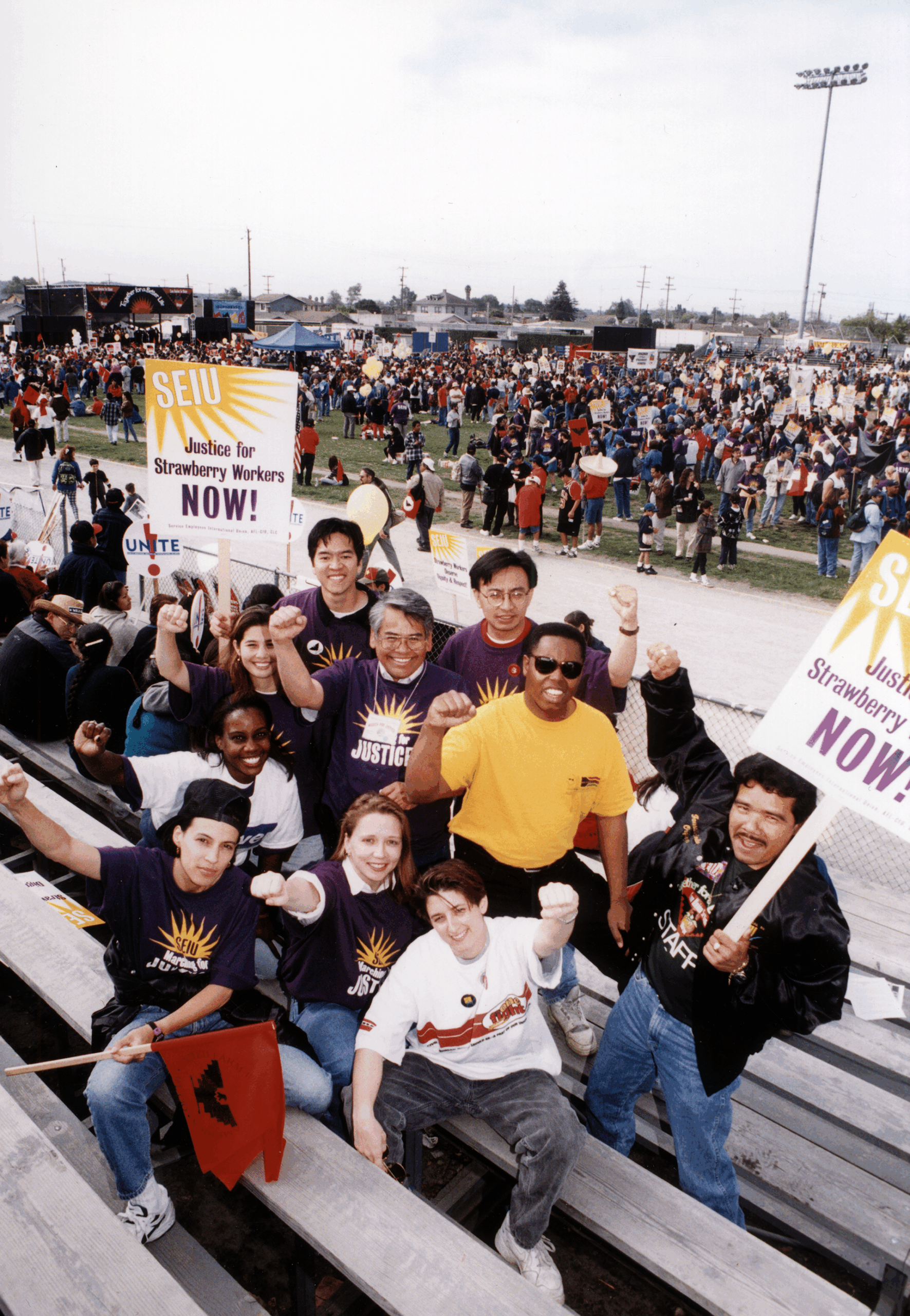
1990: Janitors Rise Up for Justice
In the 1980s, janitor wages stagnated and workers were losing their benefits. Janitors working in Los Angeles began to organize. On June 15, 1990, members of the janitor’s union in Los Angeles launched a strike & peaceful protest to win much needed workplace improvements. The janitors—predominantly underpaid immigrant women & men—were up against a powerful business community & multinational corporations. On that day, janitors, their families and supporters marched through the high-rise buildings of Century City, where they were met with aggressive force at the hands of the Los Angeles Police Department. News cameras captured baton-wielding police officers striking custodians—including men and women lying face-down on the ground. Janitors were injured. Some very badly. More than 60 would end up in hospital rooms. Two of the hospitalized were pregnant women - one who would miscarry. This event sparked the Justice for Janitors movement that spread across the country. Since the movement began in 1990, more than 160,000 janitors have won their union and their determination inspired the film Bread and Roses.
1992: SEIU reaches one million members.
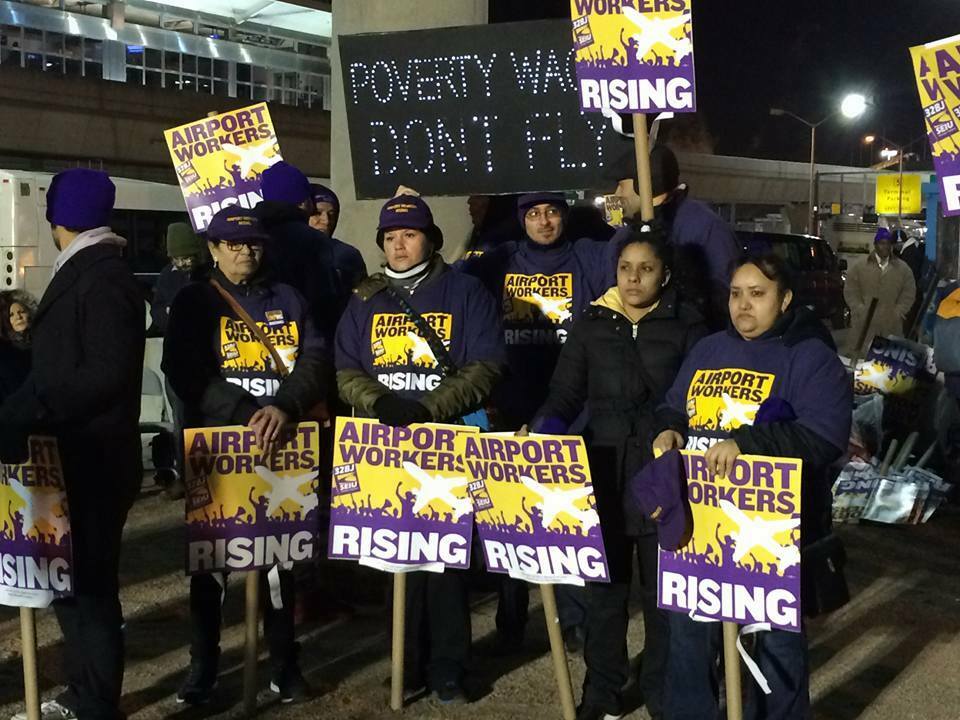
1999: Airport Workers in Los Angeles Unite, Leading to Nationwide Campaign
Airport workers, including baggage handlers, wheelchair attendants and cabin cleaners, first united and won their union at Los Angeles International Airport. Contracted airport workers, who are primarily immigrants and people of color, joined together across differences to confront corporate power and have since won higher wages and other benefits for more than 155,000 airport workers at 23 airports across the country. They continue to be part of the fight for $15 and a union.
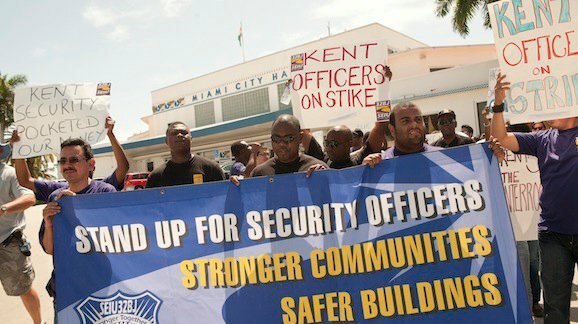
2000: First Security Officers Win Their Union with SEIU
Security officers united across the industry — from hospitals, schools, parks, transportation hubs, businesses, libraries and government institutions — to raise work standards. Today, SEIU is the nation’s largest Security Officers union, with 70,000 union officers in cities like Philadelphia, New York City, Washington DC, Chicago, Columbus, Denver, Minneapolis, Seattle, Silicon Valley, San Francisco, Los Angeles, Houston and more.
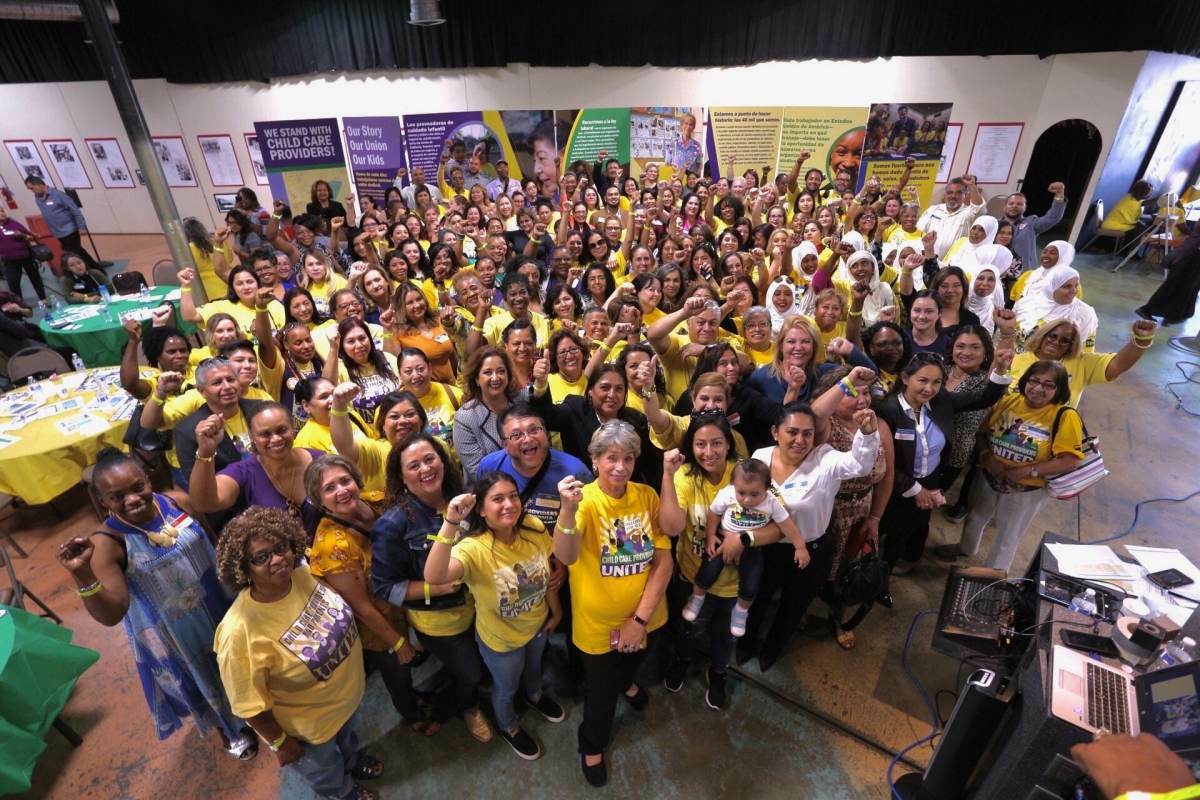
2005: Childcare Workers Win a Union & Launch a National Campaign
After a decade of organizing for the right to collectively bargain, 49,000 family child care providers in Illinois win their union election and begin bargaining a ground-breaking contract that will increase their pay by as much as 35%, provide access to health care for the first time, and improve the quality of care for the children they serve. This ushers in a wave of child care organizing across the country, improving the lives of tens of thousands more child care workers and bringing them into the movement for a better child care system for all working families.
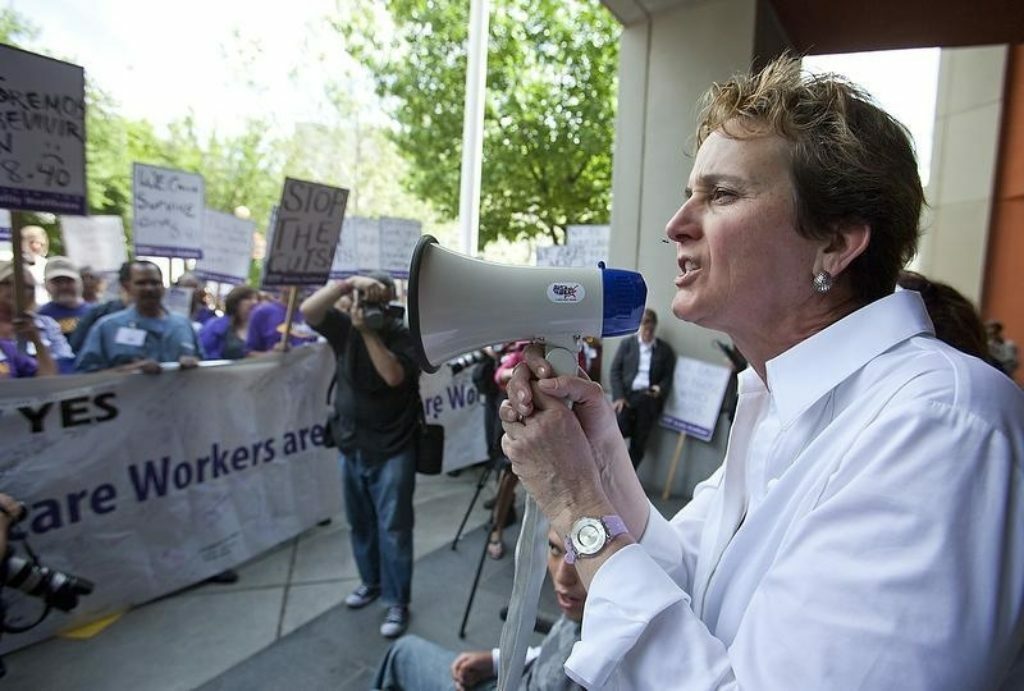
2010: First Woman Elected to Lead SEIU
In 2010, Mary Kay Henry became the first woman elected to the office of International President of SEIU). Under her leadership, SEIU members have won major victories to improve the jobs of healthcare, property services and public sector workers across the United States, Canada and Puerto Rico. Henry’s decision to back the courageous fast-food workers and other service and care workers in the historic "Fight for $15 and a Union" movement has helped 24 million working Americans win wage increases.
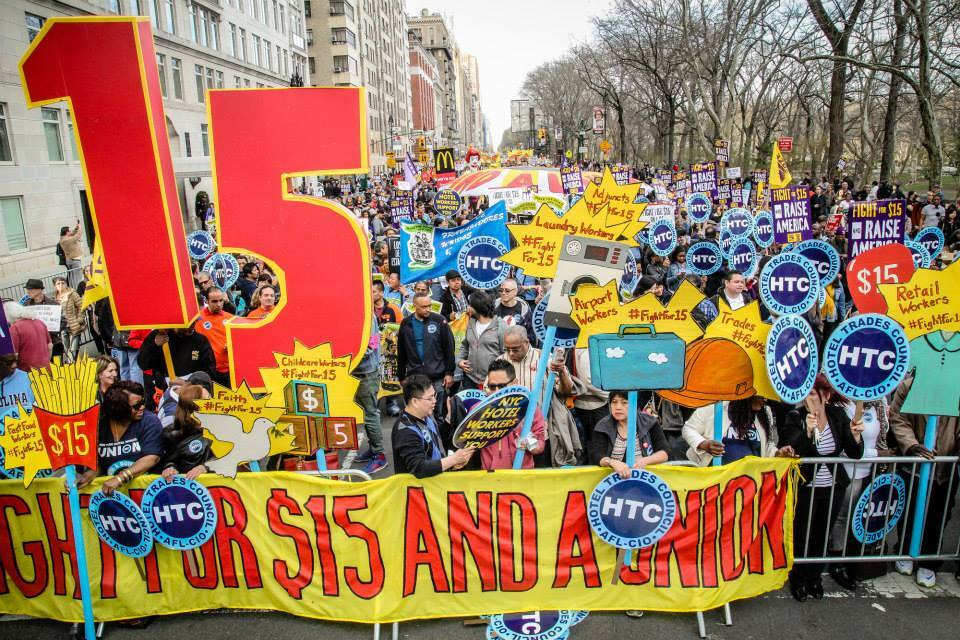
2012: Fast Food Workers Help Ignite Low-Wage Worker Movement
200 fast-food workers went on strike in New York, helping to ignite a conversation on low wages, inequality, race and corporate power in America. Soon thereafter, the movement adopted the name “Fight for $15 and a Union.” Their movement has pushed more than two dozen cities and counties and more than half a dozen states to move toward a $15 minimum wage and many more to increase wages. The group continues to demand accountability for low wages and poor working conditions from employers throughout the industry, most notably McDonalds.
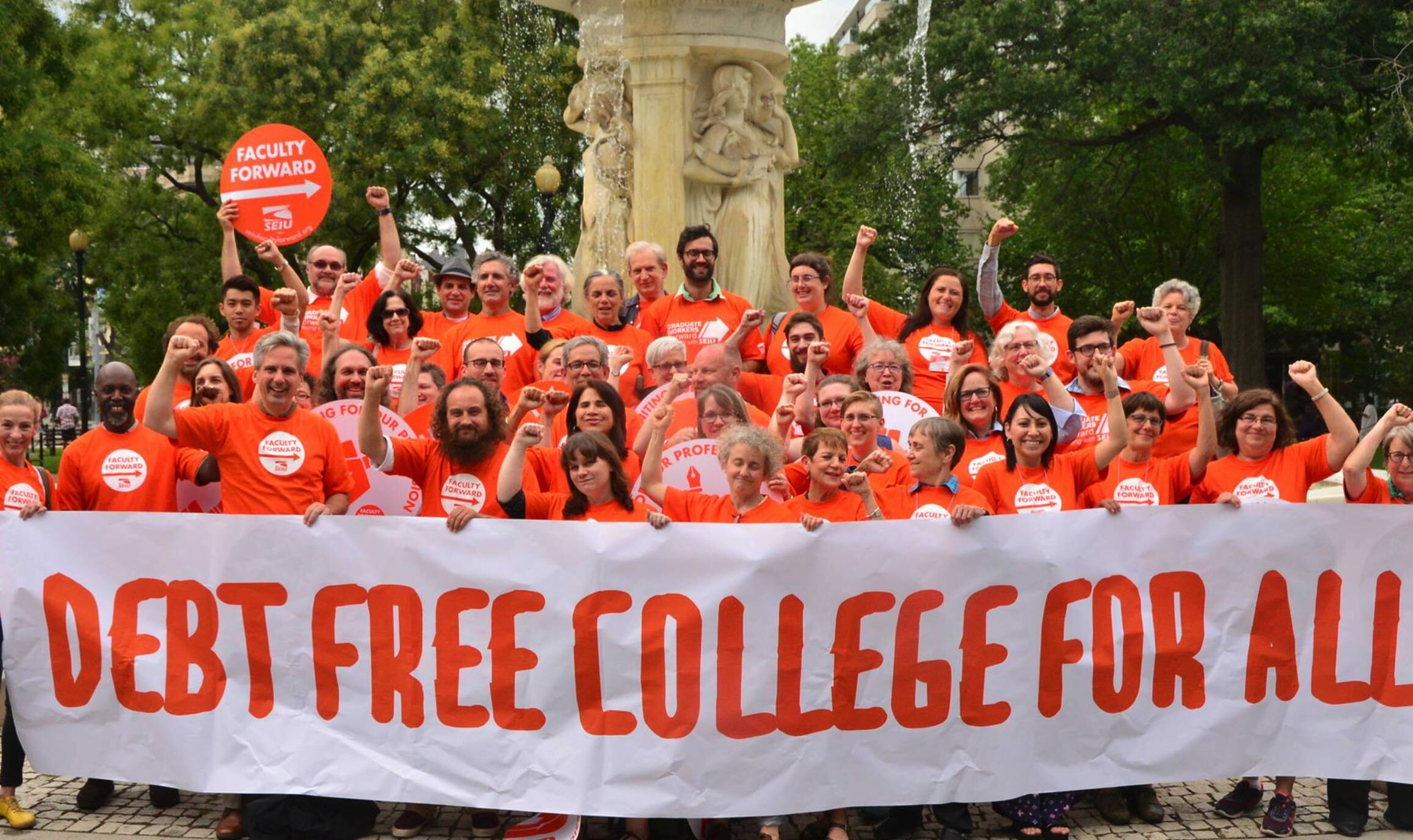
2013: Higher Education Workers Begin to Organize
Despite years of education and doing much of the same work as their tenured counterparts, adjunct professors in Boston, as the rest of the country, faced precarious working conditions, no benefits and low pay. They began to organize their unions at schools across the city. The movement spread across the country, to graduate workers, non-tenure track and professional staff, with workers at more than 70 campuses nationwide winning their union and improving working conditions.
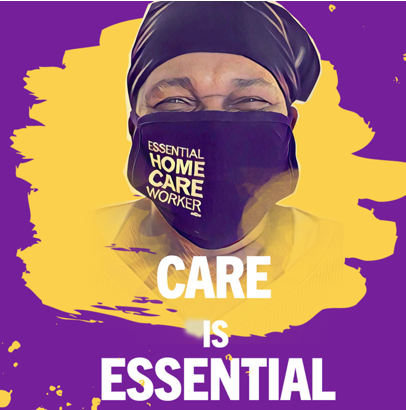
2020: SEIU Members Led on Covid Front Lines
Amid early COVID-19 devastation, brave SEIU members such as healthcare providers risked their lives working long hours on the front lines. Additionally, members found the energy to lead demands to protect workers with safety standards such as regular and no-cost testing, proper personal protective equipment (PPE), paid sick days, and double-time hazard pay.
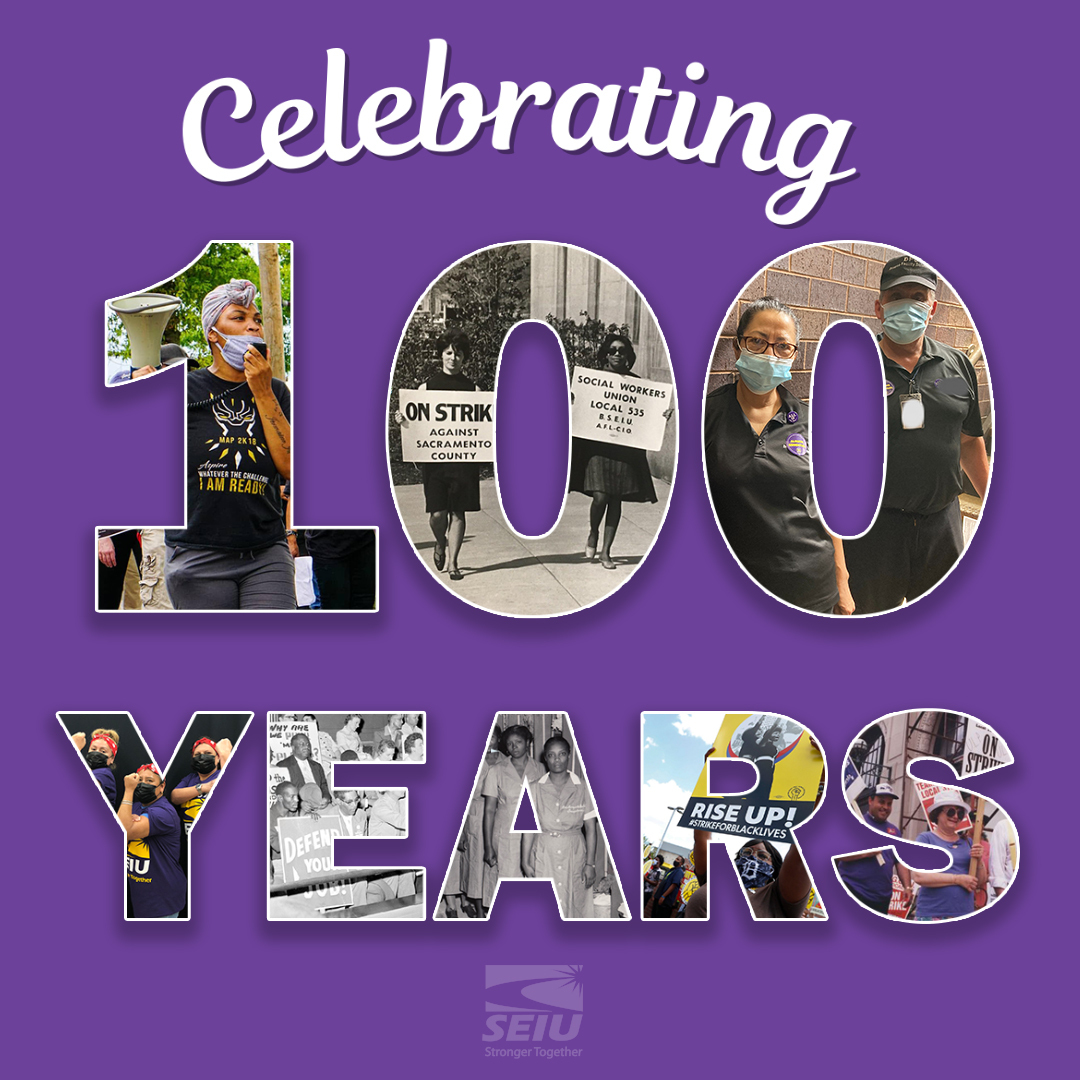
2021: We Celebrated 100 Years!
On April 23, 2021, SEIU members and allies celebrated 100 years of SEIU. On that date in 1921, janitors, elevator operators, and window washers formed what was then called the Building Service Employees International Union.
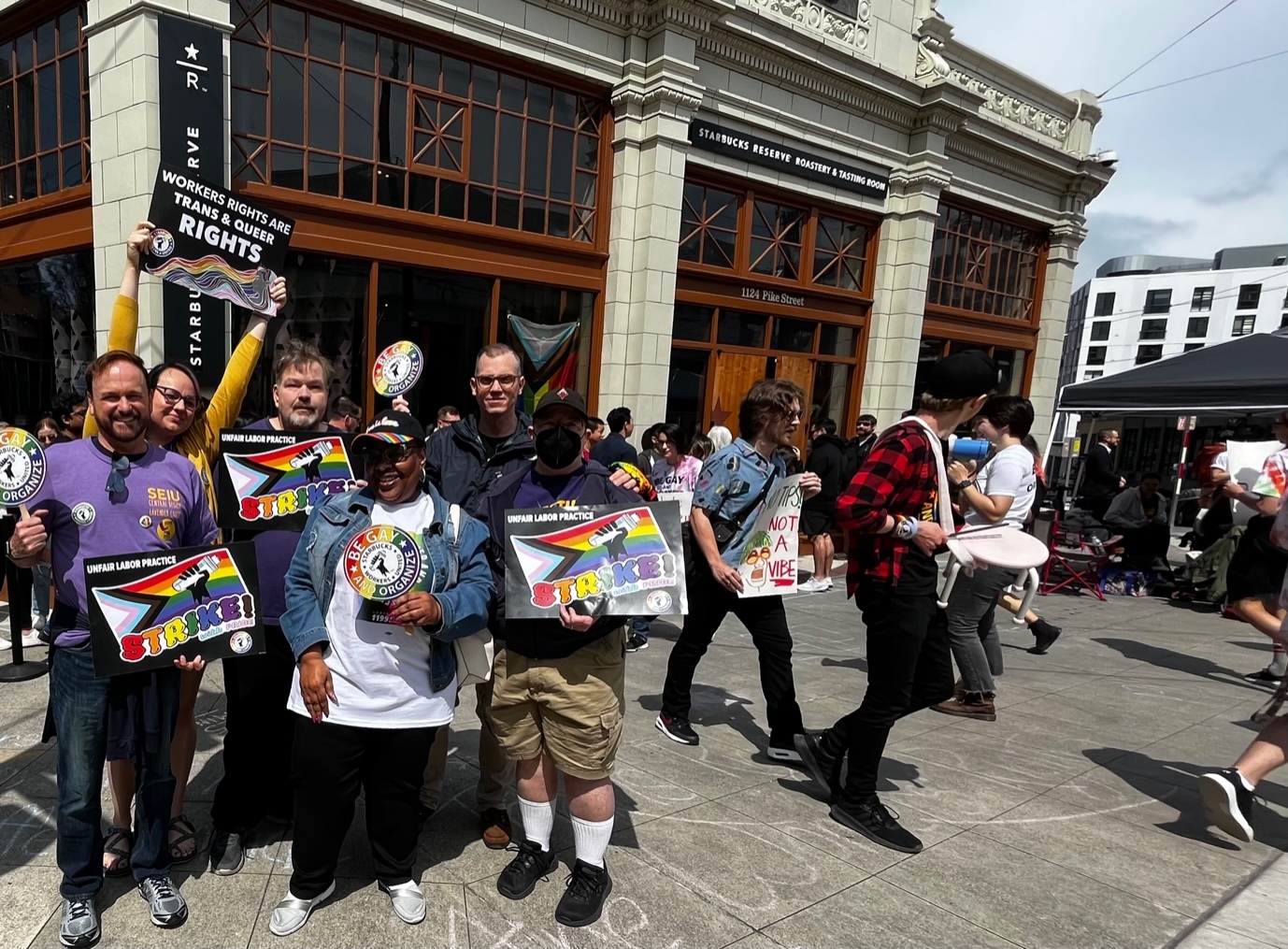
2021: Starbucks Workers Ignited a Movement
In August 2021, baristas from Starbucks stores in Buffalo, NY banded together to advocate for a voice on the job and real, material changes for their workplace. Baristas filed petitions to unionize and successfully started Starbucks Workers United (SBWU).
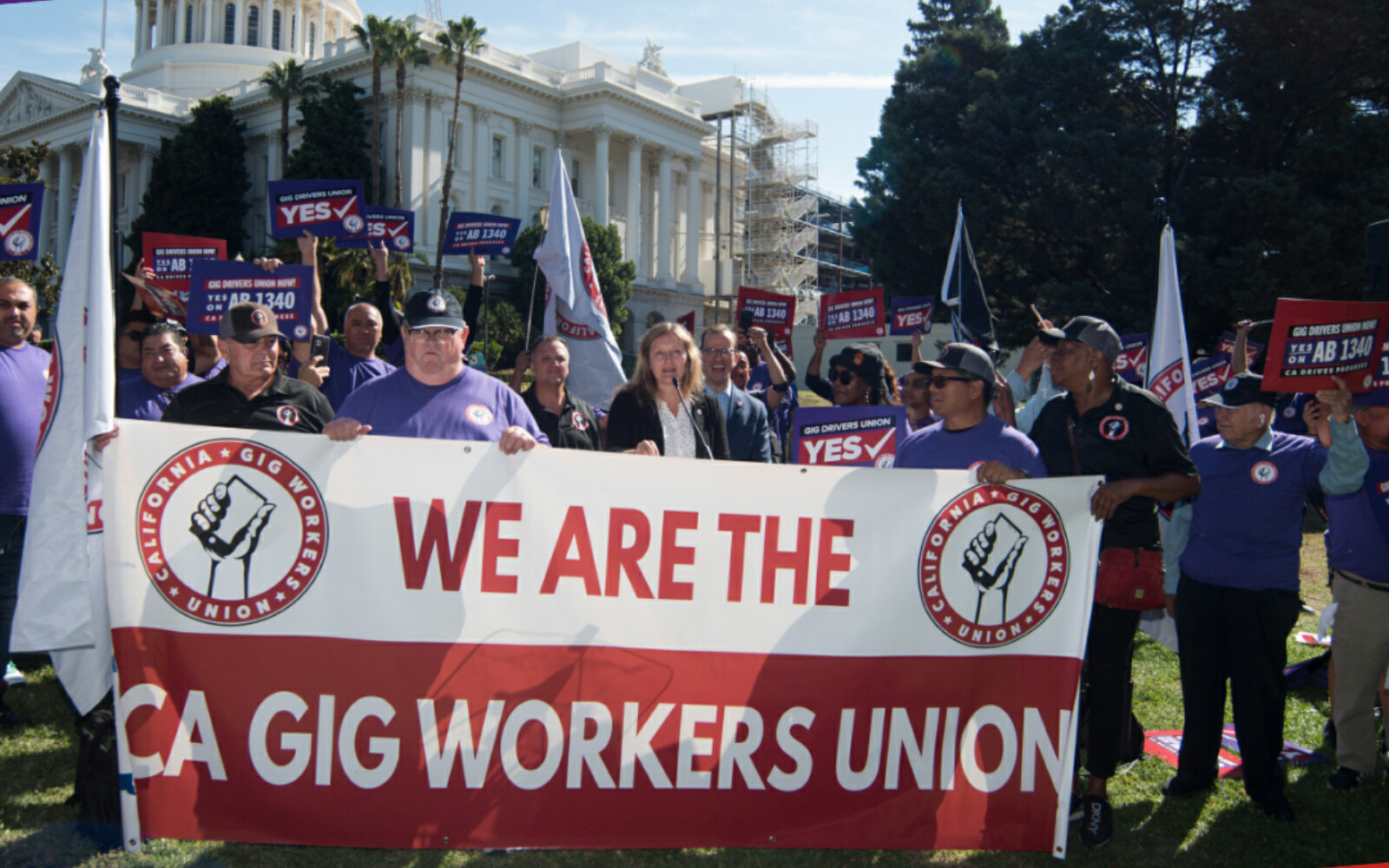
2024: Gig Drivers Won Historic Organizing Victory
In November 2024, workers in the exploitative rideshare industry won a groundbreaking right-to-unionize victory with a successful Massachusetts ballot initiative, the first of its kind.
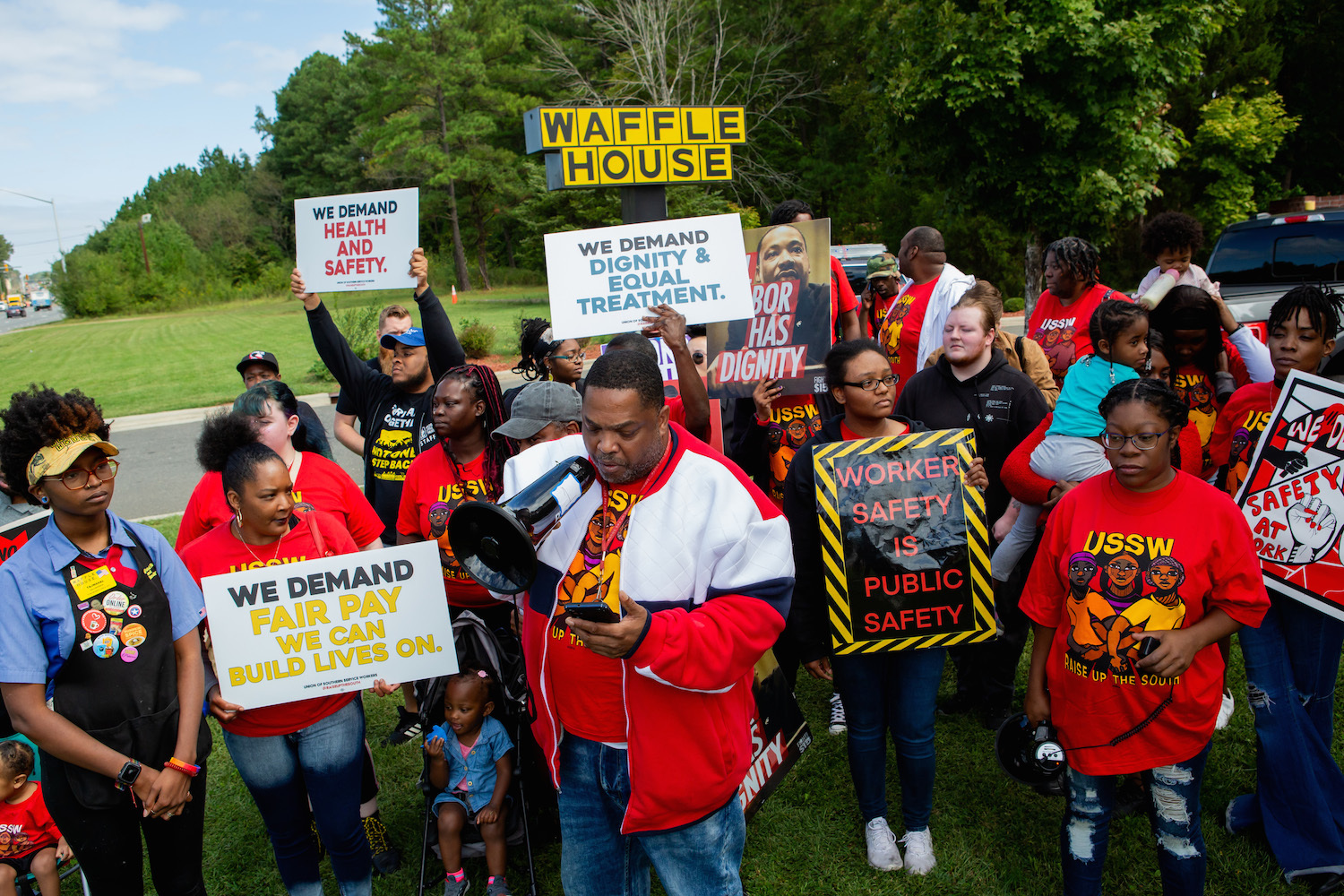
2024: Southern Workers Ramped Up Organizing Efforts
In September 2024, as part of the transformative 10-year plan, SEIU committed $50 million to continue building worker power across the South, taking the innovative organizing efforts of the Union of Southern Service Workers (USSW), which launched in 2022, to a bold new level.
2024: CA Fast Food Workers Won Historic Minimum Wage
On April 1, 2024, the minimum wage for over half a million fast food workers in California rose to $20/hour, the highest minimum wage in our nation to date.
2024: Members Elected First Black Woman SEIU President
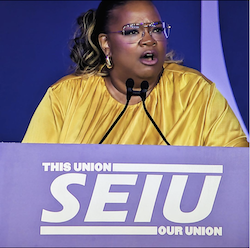
In 2024, April Verrett became the first Black woman elected to SEIU's office of International President. President Verrett immediately unveiled her 10-year plan to grow the union by 1 million members by winning groundbreaking sectoral organizing victories that → Raise standards for workers across industries and → Lift those who've historically been excluded due to racist and sexist laws. Originally from the South Side of Chicago, Verrett was raised by her grandmother, a Union Steward for SEIU Local 46.
Leadership
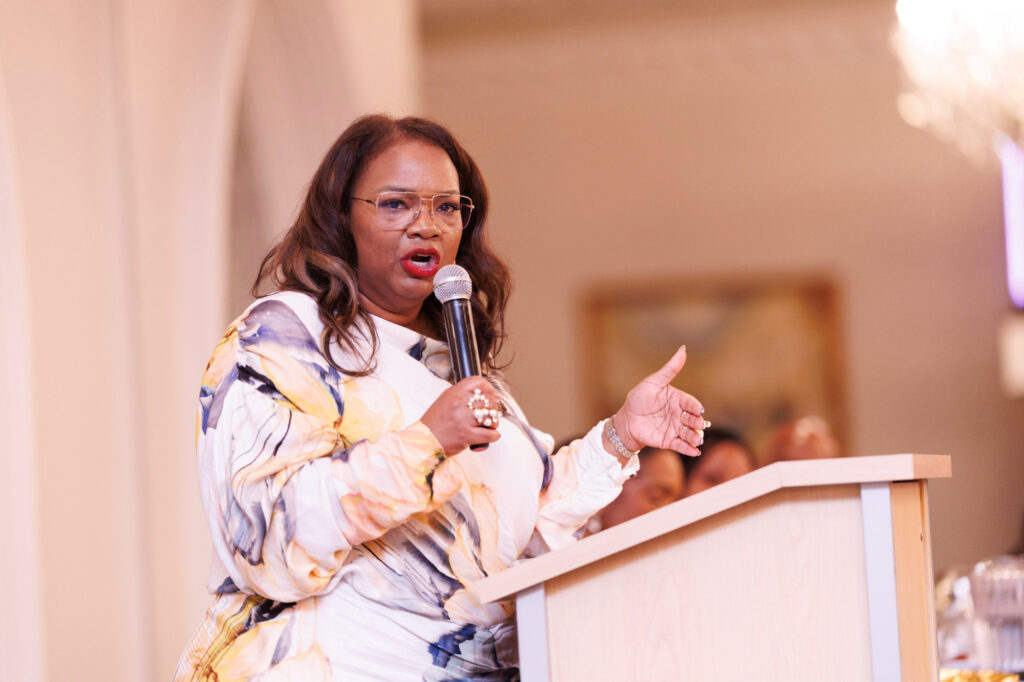
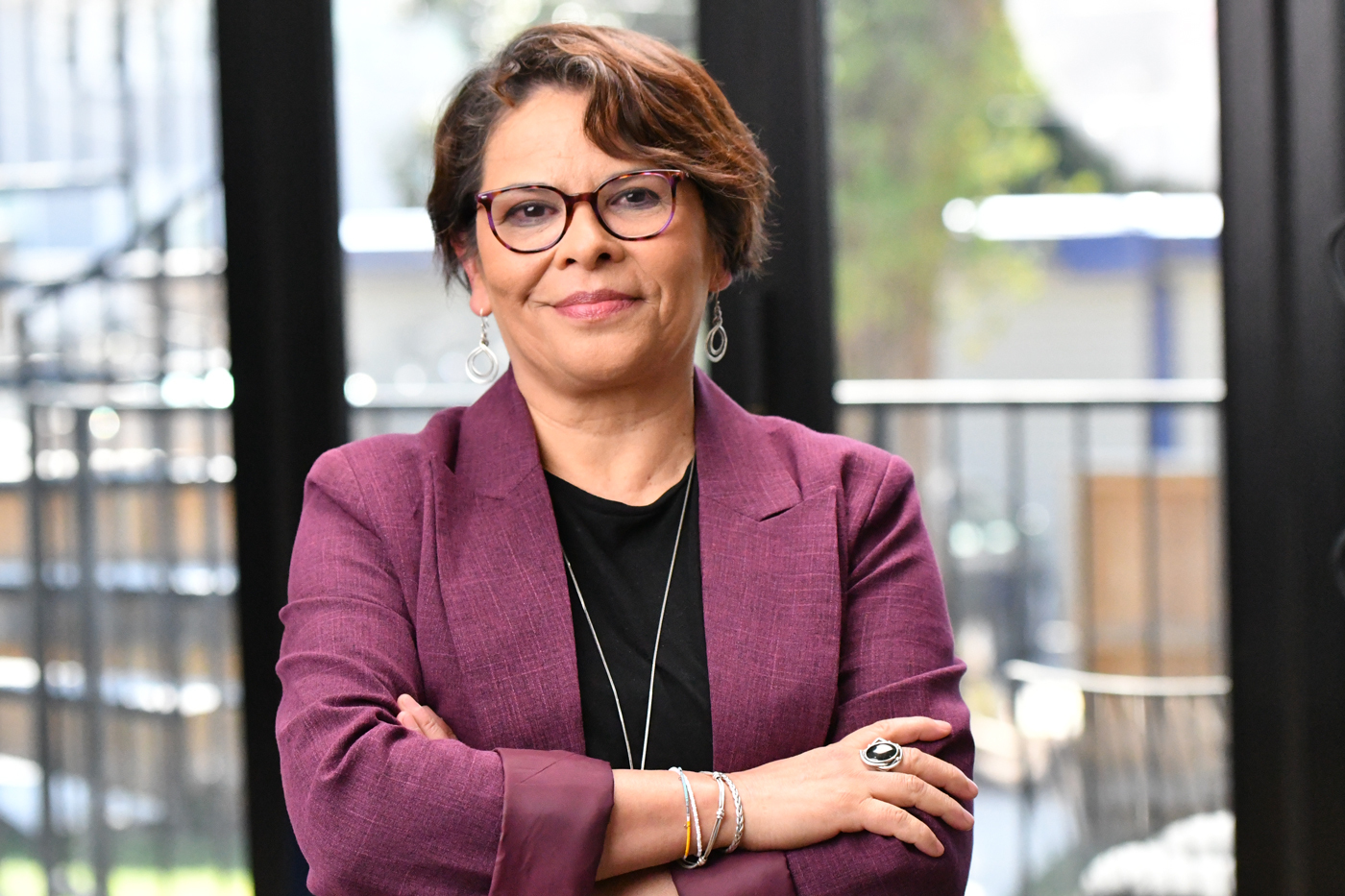
SEIU officers are elected by members at the convention every four years.




Directory
General Phone Numbers
Department Phone Numbers
To contact health and pension funds, please visit https://www.seiufunds.org
Connect
Select the department you would like to contact from the dropdown below.
If the department you're looking for isn't listed below, please try reaching them by phone from the directory above.